
Blog
Key takeaways from Fixed Summit 2026's Training Imperative session featuring Nate Thomas, Senior Regional Maintenance Director at Cushman & Wakefield
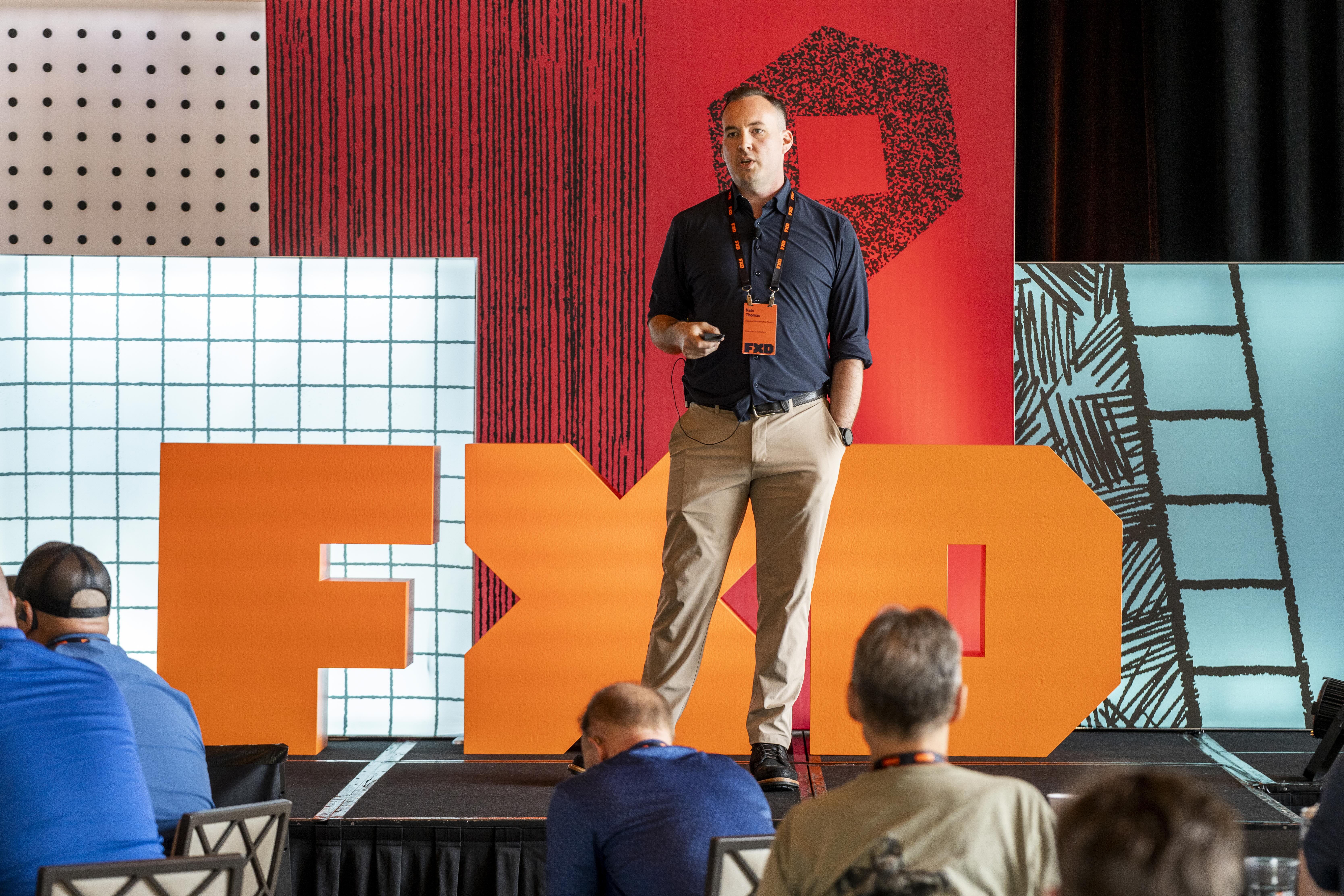
In Rome, a maintenance technician zip-tied an auxiliary brake on an escalator shut. Not because he was careless. Not because he didn't care about safety. But because no one ever told him why that brake existed — that it was the last line of defense if two other systems failed. The escalator accelerated. People were injured.
That story is how Nate Thomas, Senior Regional Maintenance Director at Cushman & Wakefield, opened his main stage session “The Training Imperative” at Fixed Summit 2026. And it set the tone for one of the most honest, practical conversations about maintenance training the industry rarely has.
His message was simple, and his framework even simpler: Step one — why. Step two — that's it.
Nate has spent nearly 15 years in multifamily maintenance — student housing, luxury lease-up, market rate, and a 1911 historic high-rise in St. Paul, Minnesota. He's seen the industry from every angle. And everywhere he goes, he runs into the same problem.
“We have too much turnover. We have a pipeline that's fundamentally broken. And we spend too much time training our teams on how to do things — talking to them — instead of giving them the context and talking about the why.” — Nate Thomas, Senior Regional Maintenance Director, Cushman & Wakefield
The result? Teams that comply but aren't committed. Teams that follow procedures until pressure builds — and then find shortcuts. Teams that don't buy in because no one ever explained what was actually at stake.
The fix isn't more training. It's better training. And it starts with honesty.
One of the session's most resonant moments came when Nate turned the mirror on leadership.
“As an industry, we like to dress it all up under business terminology. NOI. AOP. KPIs.”
He asked the room how many people knew what NOI stood for. Some hands. AOP? Fewer. KPI? A few more.
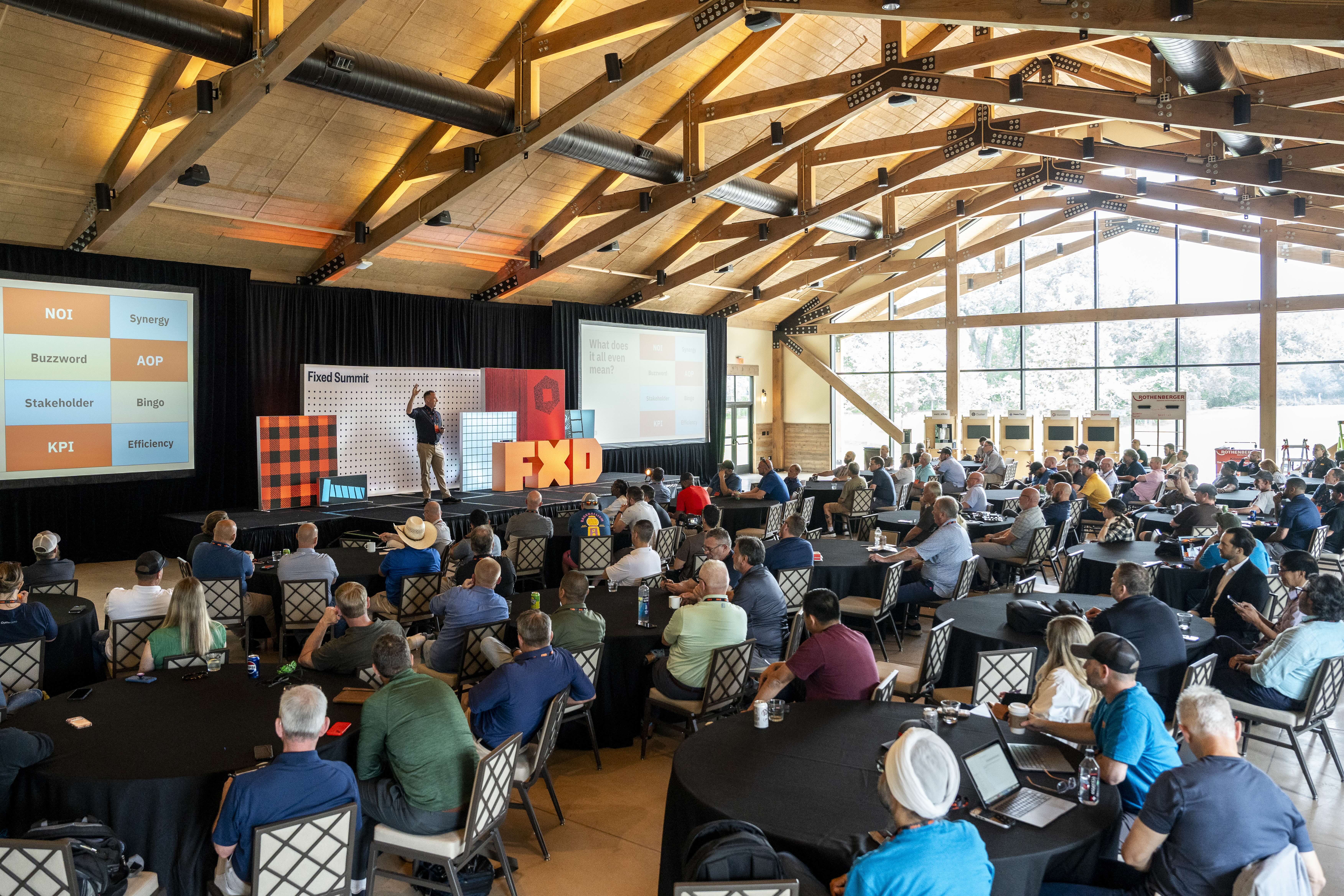
His point wasn't to embarrass anyone — it was to illustrate how easy it is for leadership to unconsciously alienate the people they're trying to lead. Net operating income, annual operating plan, key performance indicator — these terms mean almost nothing to a maintenance technician who just wants to understand why their work matters.
So what's the alternative? Just say it plainly.
“People want truth, not a corporate tagline. That truth is how you create buy-in. Your team will respect you for it.”
One of the most widely recognized patterns Nate described — what he calls the "endemic of the industry" — is “techs with titles.” AKA, what happens when organizations promote top technicians into supervisory roles without giving them the context or training to succeed in them.
A great technician gets promoted. Suddenly they're expected to read budgets, manage schedules, coordinate vendors, and lead a team. Nobody trains them on any of it. So they default to what they're good at — work orders and turns. And now the property manager is doing scheduling, and the supervisor is just a tech with a fancier title.
“You can't give what you were never given. If we didn't explain why that auxiliary brake is there — that it's the last resort if two other systems fail — and someone zip ties it shut, that's on us, not them.”
The solution: before training any supervisor on how to manage a budget, explain why their involvement matters. Before asking them to lead a team, explain why leadership is critical to property performance. Context turns passive compliance into active engagement.
Nate invited HappyCo's CEO & Co-Founder Jindou Lee and President Ben Nowacky on stage to tackle the question everyone in the room was thinking about: what does AI actually mean for maintenance teams?
The answer from both sides of the stage was refreshingly direct: more output, less busywork, more money. Not a replacement.
“AI is basically removing all the work that people don't really want to do. So they can get more output. More output means we make more money, and then we can pay our employees more money.” — Jindou Lee, CEO & Co-Founder, HappyCo
Nate's take was characteristically practical. He described AI as "an overeager yuppie intern fresh out of school who wants to work 25 hours a day — still kind of new to the material, makes some mistakes, and is actively trying to give you the answer you want rather than the right answer."
In other words: useful, powerful, but requiring supervision and proofreading.
His current workflow for training development illustrates how AI can actually change the game. What used to take three or four days to build — a complete training program — now takes about 90 minutes. He talks through his topics into Copilot, gets a structured outline back, feeds it into Gamma for a polished presentation, and then adds his own expertise and delivery on top.
The biggest pushback he's seen in rolling out HappyCo? Not the software itself — but the device. Am I getting paid to use my phone? Do I get a tablet? Once teams actually start using the technology, adoption happens quickly. The friction is in the transition, not the tool.
Nate's approach to safety training is worth stealing.
He doesn't open with Occupational Safety and Health Administration (OSHA) standards or ladder safety procedures. He pulls up a chair, sits down, and asks the room to talk about near-misses. No agenda. No slides. Just stories.
“You can literally watch as we talk about it. We can relate almost every near-miss to 30 or 60 seconds where we were just working too fast. And I can watch it start to click in my young techs' eyes that — oh, this does matter.” — Nate Thomas
His point: nowhere in that conversation does he ever say "here's why safety is important." He doesn't have to. The context does the work. That's why-based training — making safety personal, not procedural.
The same framework applies to work prioritization. Nate uses what he calls "maintenance triage" — a color-coded system borrowed from military medicine that helps teams rank tasks by urgency and impact. Neglect a low-priority PM task long enough, and it becomes a 911 emergency. Teach teams to triage well, and manageable work stays manageable.
Nate closed with a direct call to action for every role in the building:
Maintenance technicians: Ask more whys. You deserve the context. Don't wait for it to be handed to you.
Maintenance supervisors: Ask your whys too — and when you're assigning work, explain your reasoning. Even if the reason is simply "this is going to help us make more money," your team will respect you more for saying it.
Leaders and executives: Stop assuming your teams don't need to understand. Include them as the stakeholders they are. The why doesn't just flow downward — share it upward too. If your leadership doesn't understand the challenges your teams face, explain it.
“Training without the why isn't going to move people. Safety without the why doesn't protect. Leadership without the why doesn't build teams. Give your teams the why — and it will support the learning of the how.”
The maintenance industry isn't struggling because technicians can't do the work. It's struggling because too many of them have been trained on the steps without ever understanding the story — why those steps exist, what happens when they're skipped, and what's actually at stake.
The fix is simpler than it sounds. Be honest. Drop the corporate language. Share the real reasons behind the work. Treat your teams like the stakeholders they are.
And if an escalator ever breaks? At least they'll know why you can't just zip tie the brake.
The only national event for multifamily maintenance and facilities pros is returning for year three. Get on the list to attend, sponsor, or take the stage.